Taxes
How to save money on taxes via mutual aid
When we apply mutual aid tools to their proper types of economic activity, taxes go down APPROPRIATELY i.e. price-based mutual credit is taxed, business transactions and profits taxed as usual, but the care-giving and community building that SHOULD be paid for by taxes gets shifted into the timebanking and sharing realm, and the outcomes are better for everyone. It then eliminates the core issue that Lietaer describes, that the current 'community economy' is only funded by extra money involuntarily extracted from the market economy. Take that out of the equation and get to Lietaer's description of a Bali-type dual market/community currency picture.
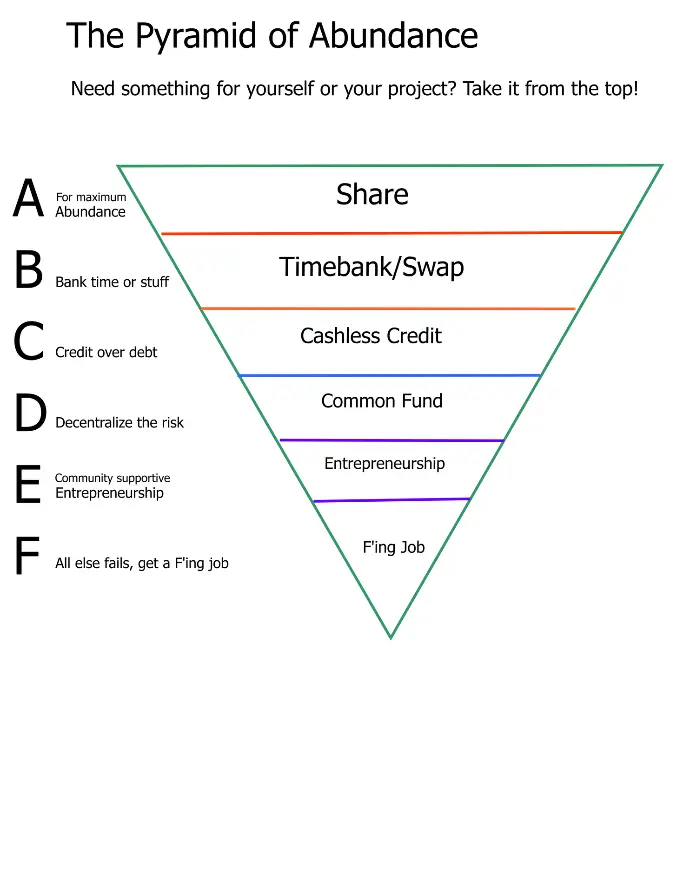
A - The more shared items you're using, the less income you need and the less tax you pay.
B - Pay MAN hours for care, community work, and other life-enhancing items that should be supported by taxes and often aren't. Pay MAN hours for help calculating and reporting your taxes.
C - Use a Common Good card or cashless credit with participating businesses (likely just a future possibility). These forms of mutual credit are taxed just like cash, and can improve your liquidity without evading any of the appropriate taxes due.
D - Set up or borrow from the Common Fund to pay taxes early or on-time to avoid interest and penalties.
E - Create or participate in an enterprise that helps you do the work you want to and pay taxes appropriately. A Dreamer membership in the HUMANs could help you realize your vision.
F - You know the drill, get a f'ing job. And don't forget to ask for help when you need it!